


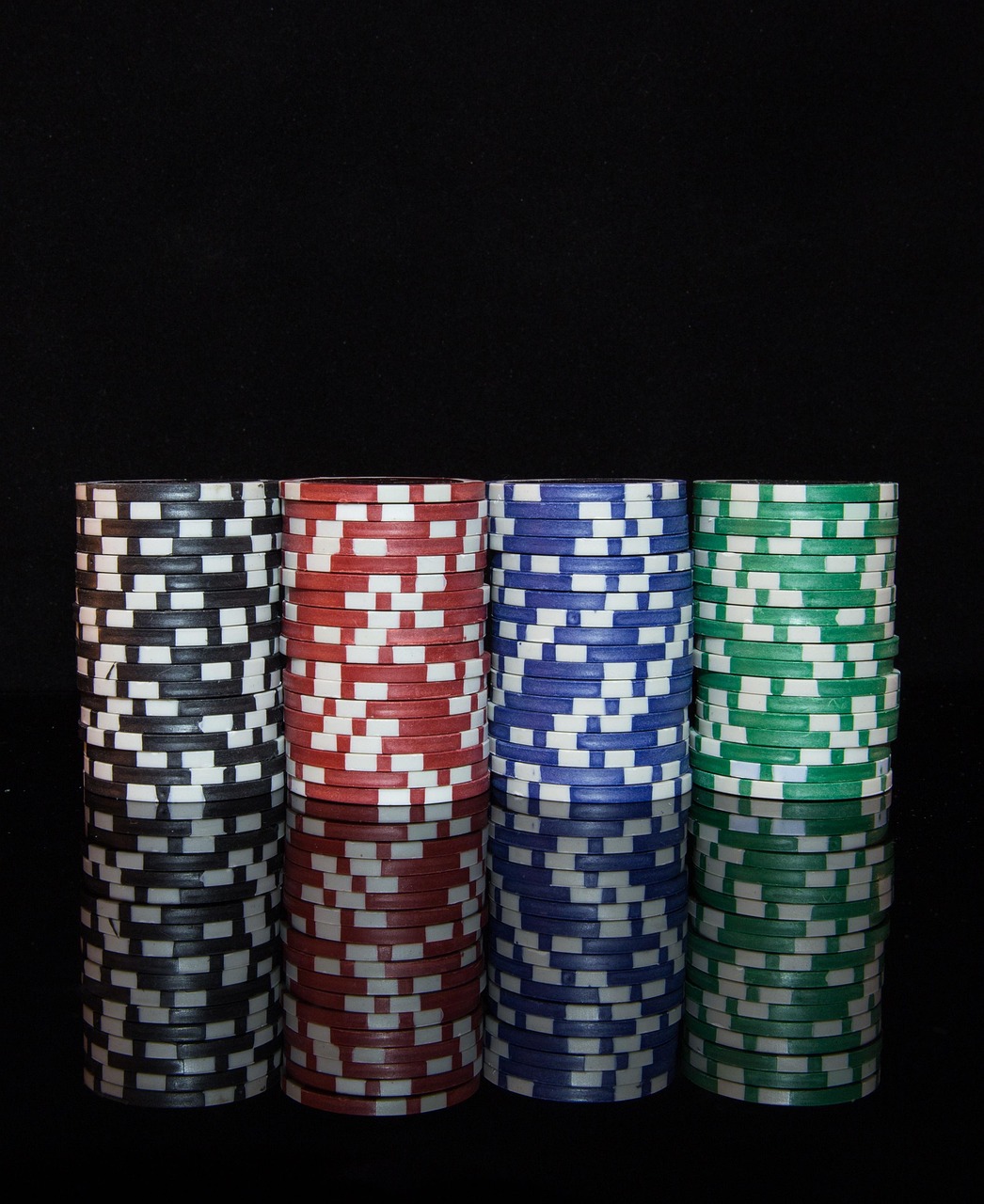
You sit down at a $5 blackjack table in Vegas. The dealer shuffles, you place your bet, and you get a 10 and a 6. The dealer shows a 7. Do you hit or stand? That decision, repeated over thousands of hands, separates players who last a weekend from those who last a decade. But here's the dirty secret: most people never learn the math. They play on gut, superstition, or worse—the advice of a guy who "always wins" at the pub. This article is about replacing that noise with numbers.
The House Edge Isn't a Conspiracy—It's a Feature
Every casino game has a built-in mathematical advantage for the house. That's not cheating; it's the business model. The size of that edge varies wildly, and knowing it is your first real weapon.
- Blackjack (basic strategy): 0.5% house edge. That's the best bet in the building if you play perfectly.
- Baccarat (banker bet): 1.06% house edge. The tie bet? A brutal 14.4%.
- Roulette (European single-zero): 2.7% house edge. American double-zero? 5.26%.
- Slots: Anywhere from 2% to 15%, depending on the machine and jurisdiction. Online slots often sit around 4% to 6%.
Notice something? The games with the most decision-making (blackjack, poker) have the lowest edges. The games with zero decisions (slots, roulette) have higher edges. That's not an accident. Skill reduces the house's advantage, so the house charges more when you can't use any.
Slots: Volatility, RTP, and the Myth of "Due"
Let's kill a myth right now: slots do not get "due." A slot machine with a 96% return-to-player (RTP) doesn't owe you 96 cents after you've fed it $100. RTP is a long-term average over millions of spins, not a personal savings account. If a machine has a 96% RTP, the house keeps 4% of every dollar wagered, forever. Your session is just a tiny blip in that timeline.
What actually matters for your bankroll is volatility. Two slots can have identical RTPs but behave completely differently: More background can be found at http://ok68.tv/.
- Low volatility: Frequent small wins. Your bankroll drains slowly. Good for casual play.
- High volatility: Long dry spells, then massive payouts. You can lose your entire buy-in in 20 spins or turn $10 into $1,000.
Here's a concrete example. Slot A has 96% RTP and low volatility. You play 500 spins at $1 each. You might end with $460–$520. Slot B has 96% RTP and high volatility. Those same 500 spins could leave you with $0, or you could hit a bonus that pays $2,000. The math is the same; the experience is not.
My advice: pick your volatility based on your bankroll, not your mood. If you have $100 to last three hours, play low volatility. If you're chasing a jackpot with $20 you don't mind losing, go high.
Poker: The Only Game Where You Play Against People, Not the House
Poker is different. The house takes a rake—usually 5% of the pot, capped at $3 to $5 in live $1/$2 games. After that, your profit comes from other players' mistakes. This is why poker is beatable long-term while slots are not.
But here's what most beginners miss: the math doesn't care about your feelings. You can play perfectly and lose for 10,000 hands. That's variance. The key is understanding expected value (EV).
Example: You have a flush draw on the turn. The pot is $100. Your opponent bets $20. You need to call $20 to win $120. Your odds of hitting the flush are roughly 4:1 (about 20%). The pot odds are 6:1 ($120/$20). Since your pot odds (6:1) are better than your card odds (4:1), calling is +EV. Over 100 identical situations, you'll profit. But in any single hand, you might miss. That's poker.
Three actionable tips for poker math:
- Memorize the rule of 2 and 4. On the flop, multiply your outs by 4 to estimate your equity. On the turn, multiply by 2. It's not exact, but it's fast.
- Track your sessions. Use a simple spreadsheet. After 50 sessions, you'll know if you're actually winning or just remembering the good nights.
- Move down in stakes when you're tilted. The EV of a $1/$2 game is the same whether you're happy or angry. But your decision-making isn't.
Sports Betting: Lines, Juice, and the Sharpest Guys in the Room
Sports betting looks simple: pick a winner, get paid. But the bookmaker's edge lives in the vig, or juice. Standard odds are -110 on both sides. That means you bet $110 to win $100. The bookmaker's theoretical hold is about 4.5%, assuming equal money on both sides.
But here's the thing: lines move. A point spread opens at -3 and closes at -5.5. Why? Because sharp bettors—professionals who bet large and move markets—hammered one side. If you're betting for fun, you don't need to beat the sharps. You just need to understand a few basics:
- Don't bet parlays for profit. A two-team parlay pays 2.6:1, but the true odds are 3:1. The house edge jumps to over 10%.
- Shop for the best line. A half-point difference in a spread can turn a loss into a push or a win. Five minutes of comparison is worth real money.
- Fade public teams. When everyone bets the Cowboys, the line moves against them. Sometimes the value is on the boring team nobody likes.
One more data point: according to a 2019 study of 10,000 bettors, only about 3% were profitable long-term. Most of those had access to proprietary data or lived in Las Vegas and could bet multiple books. For the rest of us, sports betting is entertainment, not income.
Bankroll Management: The Boring Skill That Actually Wins
You can know every RTP, every pot odds rule, and every line movement. But if you bet $500 on a single slot spin with a $600 bankroll, you're done. Bankroll management is the glue that holds the math together.
Here's a framework that works for any game:
- Separate your bankroll from life money. If losing $200 means you can't pay rent, you have a $0 bankroll.
- Set a unit size. For slots, a unit is 1% of your bankroll. For poker, it's 5% of your buy-in. For sports, it's 1–2% per bet.
- Stop-loss and stop-win. Leave if you lose 50% of your session bankroll. Leave if you double it. This prevents the classic tilt spiral.
I've seen players turn $50 into $1,000 on a slot bonus and then lose it all because they thought they were "playing with house money." It wasn't house money. It was their money, and they gave it back.
The Only Conclusion That Matters
iGaming is not a magic money printer. It's a set of mathematical puzzles with a small house advantage baked in. The people who last—whether they play slots, poker, or point spreads—are the ones who respect the numbers. They know that a 96% RTP means 4% goes to the casino, and they budget accordingly. They know that poker variance can break a good player who's under-rolled. They know that the thrill of a long shot is rarely worth the math.
So next time you open a casino app or sit at a table, do one thing: ask yourself what the house edge is. If you don't know, you're not gambling. You're just paying for entertainment. Which is fine—as long as you know the price.


Leave a reply